BBC #11: 4/30/13

For the 11th meeting of the Baltimore Business Club, we held several brief discussions on a few topics as well as a keynote discussion from Joe Brusak of Brusak and Associates, a startup accounting firm Joe began in 2012.

Google Fiber, Mike Kirby

Google recently launched their own internet and television provider, Google Fiber.  The service claims to provide internet 100 times faster than currently available, while providing crystal clear HD TV.  Aside from the fact that the speed is significantly better than the offerings by other companies today, Google also has a plan that will allow people to have FREE Internet.  You won’t get the same features as with a paid package, but free internet is already starting to change the game.  Below is the original article that piqued my interest, and forecasts that this network google is setting up (currently building out Kansas City, Austin, and Provo) is eventually going to lead to free wifi in fiber cities anywhere you walk in that area.

http://readwrite.com/2013/04/19/the-genius-of-google-fiber

How to Build a Startup Free Online Class, Seth Franz

Seth recently stumbled upon an article by Inc.com that showcases 8 free classes anyone in the process of starting a business should consider taking.

http://www.inc.com/julie-strickland/8-free-online-classes-for-entrepreneurs.html?nav=pop

We reviewed the “How to Build A Startup” class and watched a 5 minute segment of the class.  Most of this particular class revolves around a new business model that many top tier universities and companies are utilizing over the traditional business plan.  The model is also featured in the book “Business Model Generation” and we touched on it at the 2nd BBC meeting when we modeled out the business model for Chris Diller’s band, Railaway.

The segment we touched on illustrated a startup business based on renting sports jerseys and went through the significant changes the startup went through after implementing the business model over a traditional business plan.

Reinvent Transportation Baltimore, Ian Johnston

Ian discussed some of the highlights of a hackathon/weekend long discussion at Betamore designed to help reinvent Baltimore transportation from April 5th-7th.  Ian, owner of Bowtie Bike Cabs, went to the third day and discussed some of the ideas, changes, and new businesses related to Baltimore transportation that were being worked on over the weekend.  Ian also got a nice tour of Betamore (BBC meeting #5).  Ian was also able to get Bowtie listed on a mobile app that shows when and where his cab is available for rides to users of the application.  To learn more about the event, check out https://reinventtransit.com/.

Brusak and Associates, Joe Brusak

Brusak and Associates

Joe Brusak led the main discussion and talked about his experiences starting his accounting firm, Brusak and Associates.  Joe is a CPA, holds a Master’s degree in taxation, and has been in the field for 8 years.  Before making the decision to start his own firm, Joe worked for a large accounting firm for several years.  It provided him with a strong background and level of experience.  However, like many people who decide to go out on their own, Joe eventually grew tired of the hours (billable and non-billable) and felt that he had a better opportunity to achieve his goals by branching out on his own.  Joe made some early decisions with Brusak and Associates that have helped him grow at a good pace, and most importantly, maintain cash flow.  Rather than quitting his job at the large accounting firm, Joe left and took a 40 hour accounting job at Hopkins.  This significantly reduced his hours so he could work on developing his business on the side, and provided him with regular income so he could build his firm and gear up full time once he built a solid customer base.  On top of his Hopkins job, he also took a part time accounting job at another firm.

It is certainly a difficult thing to hold two jobs while starting your own business, but by sacrificing free time to slowly build his own client base, Joe seems to have set himself up for success and to eventually be running his firm full time.  It is a lesson many others can use when considering their own ventures.  From August 2012 through now, Joe picked up about 50 clients, mostly doing individual and small tax work.  To secure his first clients, he tapped into family and friends.  This led to referrals and that is where he now (and most accounting firms) derives most of his business.

Many members of the BBC have started or explored launching a business, and it is no small feat to pick up this type of client base, especially while doing so part time.  The success has Joe in a position where he feels he will be leaving his part time position at the local firm relatively shortly.  Joe also made it clear that his current employers are aware of his side firm and has worn only the “hat” of his employer when working with those clients.

The goal for Brusak and Associates is to turn it into a firm that offers a wide arrange of services focused on taxation and financial planning.  Many firms do not offer this type of all-inclusive advisement services and is one way he plans to set himself apart from other firms.  Brusak and Associates has and is continually developing their expertise to look at the full financial picture of the clients and he hopes to grow his client base into a mix of individuals and small to mid-size businesses.
Joe Brusak

BBC #9: 2/11/13

Presentation and Presenter: Armiger Imports, Zach Armiger

After a few months off, we held our first Baltimore Business Club meeting of the year in early February.  The discussion featured another start-up wine business, although one with a much different model and road than A & M Imports (BBC #8).  Zach Armiger started Armiger Imports in the Spring of 2012 as a side project during downtime at his job.  In the discussion, Zach talked about his experiences after college, going from teacher, to personal trainer, to medical sales rep, before landing at his current endeavor as an entrepreneur in the wine distribution business.

In Zach’s first year out of Salisbury University, he taught physical education at a local high school.  His initial frustration with the career centered on the fact that he couldn’t increase his income by working harder or being a better teacher.  The county and people above him dictated his earning potential in the short and long term.  To earn extra money, he started training people on the side at the Merritt, drawing on his educational background and experiences as a college football player.  He quickly discovered he could earn more money training people, and left the education world after one year to pursue training people full time.  He spent a few years at the Merritt and did well, but decided he didn’t want to be in the business over the long term.  Through one of his clients, he began working as a medical sales representative, providing doctors with medical supplies for surgeries.  The job was appealing for a while, but he was constantly on call and the job often gave Zach a lot of downtime between surgeries.  It was at this point that he dabbled in the idea of starting his own business.

Although he was not much of a wine drinker, Zach did like one particular brand that he picked up from a local store occasionally.  One day he discovered the store no longer carried the wine.  Rather than letting this event get lost in his own personal history, Zach investigated why, doing so much as to reach out to the winery that produced the wine.   It turned out that the distributor that sold the brand in MD stopped carrying it.

In early 2012, Zach began researching during his time between surgeries how he could get a few bottles of the wine, which led him into the world of wine distribution.  He met a contact through his research that was importing a Spanish wine for distribution in the North East, and the opportunity came up for Zach to handle distribution of the wine in Maryland.  Deciding he was interested in taking on this side project, Zach went through the process of getting his import and distribution license.  Although not the easiest process, with the help of his New York contact, he was able to get his license on the side during the Spring.

Ready to take the plunge, Zach acquired some warehouse space and ordered his first shipment of wine, all while continuing his work in medical sales.  One benefit to distributing wine in MD is that only one distributor can carry and sell a particular brand of wine at a time.  So Zach didn’t face the challenge of getting liquor stores to switch who they bought this wine from, but he did have to convince his prospective clients that his brand would sell.  Without any experience selling wine, Zach began using his personal network of contacts and cold calling stores with the hope of setting up a meeting with the store manager to taste his wine and hopefully place their first order.

In July 2012, Zach made his first sale to a liquor store in Northern Baltimore County and began to build some sales momentum.  He started hosting tastings at different liquor stores in order to build awareness about his wines with consumers.  To advertise the tastings, he utilized word of mouth and built a facebook page to let people know when and where the tastings would occur.

Over the summer and into the early fall, the combination of cold calling, utilizing his network and hosting various tastings proved successful.  He grew his business up to 20 customers.  Each customer offered the opportunity for regular reoccurring revenue as they sold more and more wine.  At this point, Zach felt comfortable enough with what he had built, a good customer base that was bringing in more money than he was sending out given his low overhead, that he left his job in medical supply sales to work on the business full time.

Since that point, Zach has brought on several more brands of wine into his “portfolio” that only he can sell within the state.  Along with bringing on more customers, he emphasized the importance of growing his product offering and plans to continue to bring on new and unique brands over the next year.  Although he is still not a wine aficionado, one of Zach’s best customers serves as his unofficial taster, making sure anything Armiger Imports thinks about bringing on meets certain quality standards.

Additionally, he brought on his first contract employee to help with his tastings and manage his current accounts.  This allows Zach to spend more of his time going after new business.

The progress made over the last 6 months has been pretty remarkable.  Even though less than $5k has been put into the business and there was not a strong background in the industry, Zach was able to build a strong foundation in a relatively short period of time and is on his way to growing Armiger Imports into a well run and profitable business.

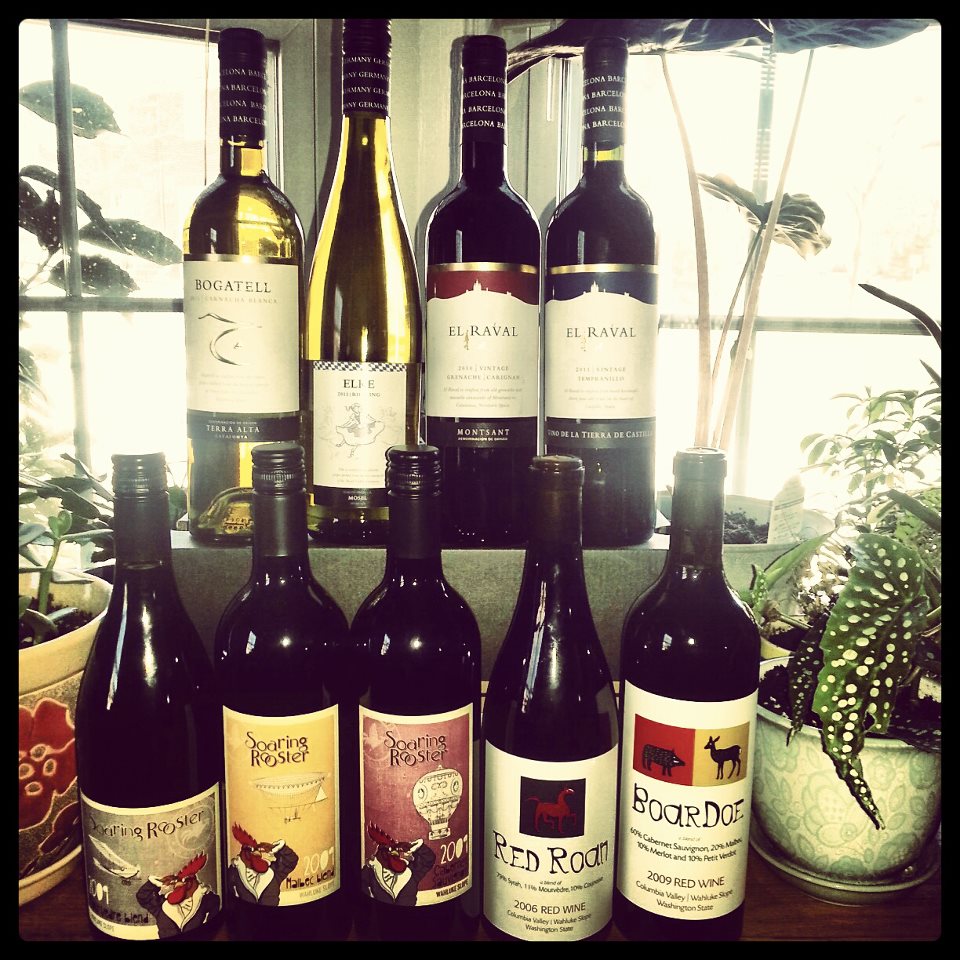
Below are the wines that Zach currently carries.  The top shelf has his original Spanish wine and the bottom shelf shows his new American wines he recently began carrying.  Next time you’re in the Wine Market on Fort Ave, be sure to pick up a bottle.

Armiger 2.11.13

BBC #6: 9/25/12

Presentation and Presenter: Smart Home Services, Fritz Eisenbrandt

Fritz Eisenbrandt

For our sixth meeting of the BBC, we welcomed Fritz Eisenbrandt, the President of Founder of Smart Home Services (baltimoresmarthomes.com).  For his presentation, we held an open conversation, discussing his background, how it lead him to found Smart Homes Services, his experiences with the company, and his future goals.  The conversation was the first of its kind for the BBC, as we explored the successes and challenges of a three year old company, with lots of questions and answers along the way.

Fritz went to Washington College, and began his career with Ryland Homes on the Eastern shore upon his graduation.  At Ryland, Fritz gained invaluable experience in the industry, learning from a home construction company with a national footprint.  After Ryland, Fritz worked as a project manager for Delbert Adams Construction Group, an award winning builder located in Baltimore.  While at Delbert Adams, Fritz saw the opportunity for a construction company focused on energy efficiency to emerge in the market.  Home efficiency through new types of lighting, advanced insulation, windows, and other products & techniques did not have a foothold in the marketplace.  Fritz saw this as a great opportunity to form his own company that would specialize in this type of home construction and remodeling, as home owners began to look at ways to reduce their electric consumption, not only to save money, but to help the environment as well.

There are two things Fritz did immediately upon forming Smart Homes that he credits with helping drive his success with the company.  They may seem obvious, but it can be easy for first time entrepreneurs to focus on the wrong things.  One of the first things Fritz did upon founding Smart Homes was to bring on a talented industry veteran, Scott Kuster, to manage many of the construction elements of Smart Homes.  Bringing on a construction expert like Scott allowed Fritz to spread out the two most important roles in the company, constructing high end projects (Scott), and driving more revenue through sales and marketing (Fritz).  Although Fritz is still involved in much of the design and implementation of projects, having Scott on board from the beginning has allowed Fritz to focus more on sales and marketing, the life blood of any company.  The other thing Fritz was able to do from the onset of Smart Homes was to line up customers early.  This may seem basic, but it can be easy to focus on building processes and other things when first starting a business rather than doing one of the most important steps, acquiring customers.  Fritz lined up work from the start, and he has built on that initial momentum over the last three years.

One of the best pieces of advice Fritz offered was to work hardest when times are good.  It can be easy to grow complacent when everything is going well, but by working hardest at these times, you have the opportunity to take a company to levels of success much higher than previously possible.  Again, this may seem obvious, but is actually one of the most practical and real pieces of advice heard so far at the Baltimore Business Club.

Lastly, Fritz and the group discussed opportunities for growth with Smart Homes over the next few years.  Already a leader in the residential energy efficiency market in Maryland with hundreds of customers, Fritz is building his ‘Smart’ brand toward being the go-to company in energy efficiency retro-fits as well as custom home building.  He also sees the opportunity to grow the company beyond Maryland over the next few years, and is working feverishly toward that goal.

Smart Home Services

Presentation and Presenter: We Are One 365, Matt Wood

Our second presentation centered around another discussion, led by Matt Wood, Founder and CEO of the non-profit, We Are One 365 (weareone365.org).  Matt formed We Are One (WAO) in 2011 while a grad student at the University of Maryland.  The mission of the organization is simple: to raise awareness of the struggles US military families go through and to raise money for military families in need.  The WAO team accomplishes these goals in two main ways.  To raise awareness, members of We Are One workout at least once a week wearing a WAO shirt or wristband as a reminder while they work out.  Several individuals blog about their workouts once per week, and the blog is closing in on 365 days in a row of work outs.  As an example, a group in Baltimore works out every Sunday and blogs on the website.  Individuals do so on other days, although the plan is to switch over and have 7 cities with teams of people work out on an “assigned” day of the week.

WAO raises money to support needy families through the proceeds of t-shirt sales and by hosting events in various cities.  The events typically include some kind of athletic event (5k, basketball tournament etc) followed by a ticketed social event.  In it’s first year, WAO donated thousands of dollars to families in New York, Boston, Baltimore, and Washington DC.  WAO also has partnered with several groups, including the Ursinus lacrosse team.

The discussion not only touched on the successes of WAO, but also overcoming many of the challenges in running an organization of volunteers.  How does the board make tough decisions?  How do you keep volunteers motivated for extended periods of time?  How difficult is it to become a certified 501c3 (IRS non-profit status)?  Where does the organization go in year 2 and beyond?  How do you rotate leadership?  What difficulties arise when donating money?  How does the organization sustain itself financially?

It was a very engaging conversation and our first non-profit presentation.  It was  especially interesting to see and hear the depth in similarity between running a business and a non-profit. Considering many members of the BBC are very active in We Are One, we should hear more from WAO in the future on this blog.

BBC #5: 8/28/12

Presentation and Presenter: Betamore, Mike Brenner

We invited Mike Brenner to be our first guest speaker at the BBC because of a recommendation from someone in the Baltimore community.  He did not disappoint, as he explained many of his past experiences, ideas, and introduced his latest company “Betamore,” with lots of questions and answers along the way.

After graduating from George Washington, he launched a web design studio, Sunrise Design, with his Alma mater as one of his first clients.    While running the studio, he also helped organize Beehive Baltimore, a community of other freelancers, designers, and entrepreneurs.  He would later take some of his lessons learned from the Beehive to help launch Betamore.   He launched his third major project, Startup Baltimore in 2010.  The website served as an online publication that followed the Baltimore startup community.  Earlier this year, the website was acquired by Technically Media and re-branded as Technically Baltimore, to compliment one of their other publications, Technically Philadelphia, which has a similar focus in Philly.  Hearing about these experiences provided an engaging conversation for the BBC.  Most of our regular members are in sales or engineering (with Chris Diller being the lone designer), so it was interesting to hear about the different communities and people around Baltimore.

We also discussed some ideas regarding “The Lean Startup,” by Eric Ries.  Drew Vogt presented the startup loop at a past BBC meeting.  Mike is a big proponent of the ideas discussed in the book, so it was exciting to hear positive feedback about some concepts we had previously discussed.

Lastly, we discussed Mike Brenner’s latest project, Betamore, a startup incubation center he is launching in Federal Hill this Fall with two other partners.  These types of centers exist in major cities across the country, and the Betamore team is looking forward to helping other entrepreneurs achieve their goals while building a talent hub to hopefully keep many of these growing tech companies in Baltimore and attracting talent to move here.


Individuals in early stage companies can join Betamore (with different membership opportunities) to take advantage of shared work spaces, collaboration, and mentoring from the Betamore staff.  They also hope to attract venture capitalists to join, so they have early access to some of the innovative ideas the city has to offer.  A key differentiator with Betamore is the emphasis of ongoing education.  They have a classroom set up in their facility, and plan to have members and experts in the community teach classes that are open to the general public.  Interested in learning how to build an iphone app?  Take the Betamore class on it.  Want to learn more about website design? There is a Betamore class for it.  Mike describes the community as “a gym membership for nerds,” and although construction has delayed its opening until October, they have a few dozen applicants ready to move in.

However, Betamore is hosting a launch event at the end of September called “Startup Weekend.”  Individuals who sign up can literally toss around ideas, meet co-founders, build an initial product, and pitch it to mentors and investors all between a Friday afternoon and Sunday evening.

Members of the BBC thoroughly enjoyed the discussion and we are looking forward to keeping the meetings fresh by not only continuing our own presentations, but by hosting other guest speakers from the community.

betamore.com

technicallybaltimore.com/


BBC #4: 8/13/12

Presentation and Presenter: Erich & Brothers, Erich Raschid

Erich lead off the presentations with the idea for a full service painting company, called “Erich & Brothers.”  Erich’s experience in the painting business is well known among the BBC members.  His family has been in the business for 25 years, running “Finishing Touch Painting,” giving Erich more than enough opportunity to learn many aspects of the business during his summers in high school, college, and grad school.

Presentation and Presenter: Kickstarter, Mike Kirby

I’ve been investigating Kickstarter the last few months and am preparing an application for The Renewable Report.  It’s been a great experience so far and because several people had limited knowledge it existed, it seemed like a great site to browse over.

In short, it is a funding platform for creative projects.  Creators submit a project, whether it’s a film, book, video game or any other project you can imagine.  The creators set a funding goal and users donate money to help the creator work on the project.  Over $250m has been raised to fund thousands of projects, with most projects accounting for less than $10,000.

Presentation and Presenter: Baltimore Grand Prix Pics, Chris Diller & Mike Kirby

The Baltimore Grand Prix is coming to town again Labor Day weekend.  Last year, Chris & I put together an idea to create souvenir pictures of the race, showcasing city landmarks.  We didn’t follow through in 2011, but we are seriously considering it for 2012.  Over 160,000 people attended the race last year, and although the numbers don’t look to be near that, we still think there is an opportunity to sell pictures and make a few grand.  The basic idea is to create 1-3 drawings that can easily be copied and sell them to retailers for $10 a piece, with a retail price of $20.  If we can sell 50 pictures to 6 retailers in the next few weeks before the race, we’ll generate $3k in revenue with less than $600 in cost and 20-40 man hours of work.  If successful, Chris also has a launching pad to expand his talents into other local sports drawings.  Here is an example of a possible picture.

Presentation and Presenter: Ian Johnston, Bow Tie Bike Cabs

It’s always exciting when the BBC has presentations featuring businesses in their launch stage, and Ian did not disappoint here.  Currently, Baltimore does not have a bike cab service available in Federal Hill, Canton, or Fells Point.  Ian has spotted the opportunity and is exploring the market.  The idea is to start small with one Pedicab run by Ian on Thursday, Friday and Saturday nights.  If the first few months are successful, Ian plans to expand the business with more cabs.

The real revenue opportunity comes with the launch of several cabs and reoccuring advertising dollars, but it all starts with a small test run with one cab.  Ian has secured a cab from Main Street Pedicabs and hopes to have it delivered in late August/Early September.  He see’s Ravens games as an early opportunity to drive business.

Some of the topics we discussed included: costs, marketing with social media, expanding the business, advertising opportunities, potential routes, seasonal revenue issues, unique marketing opportunities, storing the bikes, insurance, and steps taken so far.

Here is the concept for the drivers’ uniforms with the logo Ian has created for the business.

BBC #3: 7/22/12

A flash power outage Sunday night on a few blocks in Fed Hill almost postponed the meeting.  Fortunately, Jackson street opened their doors and the meeting went off without a hitch.

Presentation and Presenter: Lean Startup Loop, Drew Vogt

Drew presented the lean startup model loop, featured in the book by Eric Ries titled, The Lean Startup.  Drew explained the loop and the advantages it has when building and launching a product.  Rarely if ever can a company create a perfect product for a customer.  This loop emphasizes building a minimum viable product that can be tested in the market place.  See the response, learn from it, change it, and re-launch and continually repeat this process.  The loop is illustrated below.

Presentation and Presenter: The Renewable Report Consulting, Mike Kirby

I described through a power point presentation the prospect of using The Renewable Report to set up solar consulting services down the road.  If a regular audience can be built, I see the potential for residential and commercial solar consulting as a viable and untapped market in the near future.  We went over some of the processes and action steps required to achieve that goal.

Presentation and Presenter: Universal Design and The Children’s Book for Grown Ups, Erich Raschid

Erich first touched on an architectural concept called Universal Design.  This method tries to implement building designs that can be used by everyone, with an emphasis on those with disabilities.

Then Erich presented his idea for a book he is creating, The Children’s Book for Grownups.  He did a “prezi” presentation and went over the layout and some of the ideas he is putting together.  He also passed around several drafts of some of his work.  His book has a humorous but real side to it as well.  If you have any questions, hit him up on twitter @youngadultlifeadvice.  But not really.

Presentation and Presenter: Newsletter for Farmers, Teddy Schreck

Before Teddy recently moved to Baltimore (great choice!), he worked in Chicago trading farm related commodities.  He feels there is a huge disconnect between the information available to the people working in those exchanges and the farmers producing the product.

His idea is to create an informational, paper newsletter for farmers to relay that information, allowing them to make better decisions for their business.

BBC #2: 7/10/12

Presentation and Presenter: The Railaway Business Model, Mike Kirby

I based this presentation off a book that recently came out, Business Model Generation.  The book offers a unique perspective to look at various types of businesses, through a 1 page business model.  Modeling your business this way doesn’t guarantee success, but it does give a great overview of how a business runs and can really indicate where strengths and weaknesses lie.

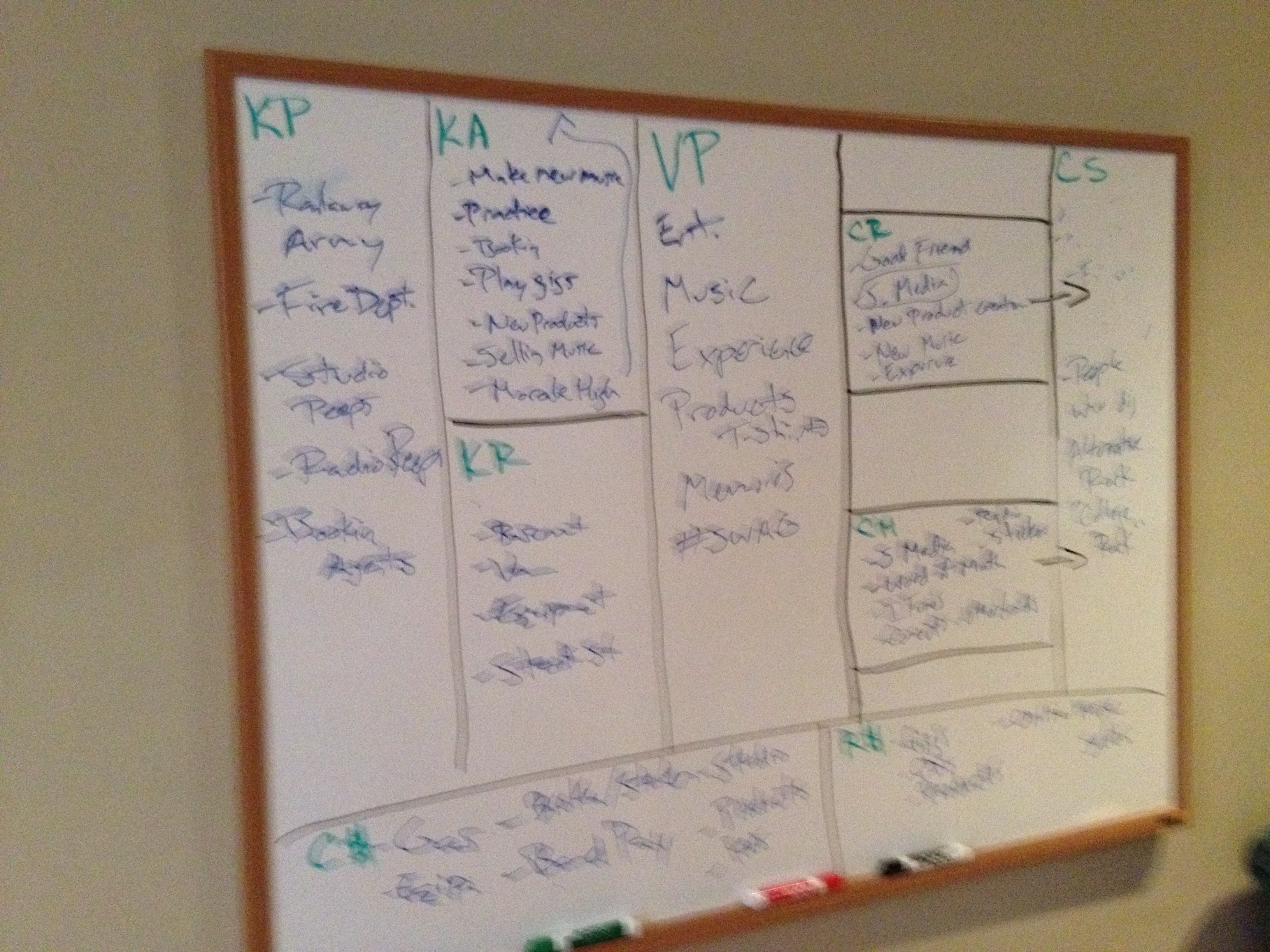
For this presentation, I briefly explained the 9 building blocks of the business model.  Then we brainstormed a few ideas we wanted to model out, and chose Chris Diller’s band, Railaway.  The group then came up with all the pieces that illustrate Railaway’s business model.  Below is a blank copy of the Business Model Canvas with the 9 key building blocks.

And here is the whiteboard model we brainstormed for Railaway.

Presentation and Presenter: Doomsday Jesters, Seth Franz


This was the first active business that was presented at the BBC, doomsdayjesters.com.  Seth works in commercial real estate, but began building a satirical online retail store in January 2012 to compliment the reality show “Doomsday Preppers” by offering products to fans relating to the oncoming Apocalypse.  Seth brought all his products and the presentation turned into an enjoyable question and answer session about how he started the business, some of the challenges he faced, and what his goals are between now and December 2012.

Topics included:

Costs, building a website with limited money and no tech skills, dealing with foreign and domestic suppliers, product development, prospects beyond 2012, idea creation, implementation steps, launching the website, marketing, and landing office space on the cheap, to name a few.

Below is a picture of Seth holding two of his products (and wearing a third), a Doomsday insurance policy certificate and insurance card.


BBC #1: 6/25/12

Monday, June 25th marked the first official meeting of the Baltimore Business Club.  Three presentations were made, and the response was strong enough to keep the club going.

Presentation and Presenter: The Renewable Report preview, Mike Kirby

I made the first presentation, and we viewed one of my draft episodes of the Renewable Report.  The concept for the online show was born this past April, and this was the first time anything had been shown publicly.  The episode we viewed was a not yet released show, featuring an interview with Fritz Eisenbrandt, the Founder and President of Smart Homes Services.  In the episode, we discussed home energy audits and the various services his company provides.  After the show, members offered tips and suggestions for how the show could be improved before it’s launch on July 16.  Two ideas that were immediately incorporated into the show were to include the logo, email address, and twitter handle of The Renewable Report on the screen during the episodes.

Presentation and Presenter: Investing in the Pride of a City, Drew Vogt

Drew made a power point presentation about putting together an “investment group” to purchase 2-6 Personal Seating Licenses for the Ravens.  It was a funny, but well thought out and informed presentation.  Drew’s summary of his presentation is below:

Main Points:

-2009 recession dramatically reduced the price of M&T Bank PSLs.
-Section 550, $4,000/PSL in 2007 -> currently $2,000/PSL
-Sell tickets at 20-30% above face value
-Hold on to PSLs for 5-10 years allowing PSL market to go back to 2007
levels, or higher.

Revenue Generation:
– Yearly ticket sales
– Sell PSLs at higher value (50-150%) in 5-10 years

Summary:
With an investment team of 2-6 people, purchase a group of 2-6 PSLs.
Invest money now, make money later.

Presentation and Presenter: The Drift and Thinking the Unthinkable, Mark Wheeler

Mark presented parts of a consulting workshop he attended during his time with Colorful Remedies, a painting and remodeling company in West Chester, PA.

The concept of the drift basically states that within groups of people, actions and words are often repeated, whether right or wrong.  When things are repeated, they are justified within the group and solidify their place as truth.  This can have negative consequences in certain cases, and the main idea is to avoid the drift, step back, and think about what is really going on as an independent mind.

Thinking the Unthinkable is a model Mark illustrated on the white board with four quadrants: 1) status quo, 2) crisis, 3) thinking the unthinkable, and 4) new reality.  There is a circular cycle here that promotes progress.  What Mark stressed was the importance and value of skipping the crisis stage and heading straight from the status quo into thinking the unthinkable.

Introducing the Baltimore Business Club

The Baltimore Business Club is a grassroots entrepreneurial club geared toward twenty-somethings living in Baltimore.  We meet twice a month to share business ideas and any other worldly knowledge our members have to offer.  We’ll use this site to recount the discussions of our meetings and share some new material.

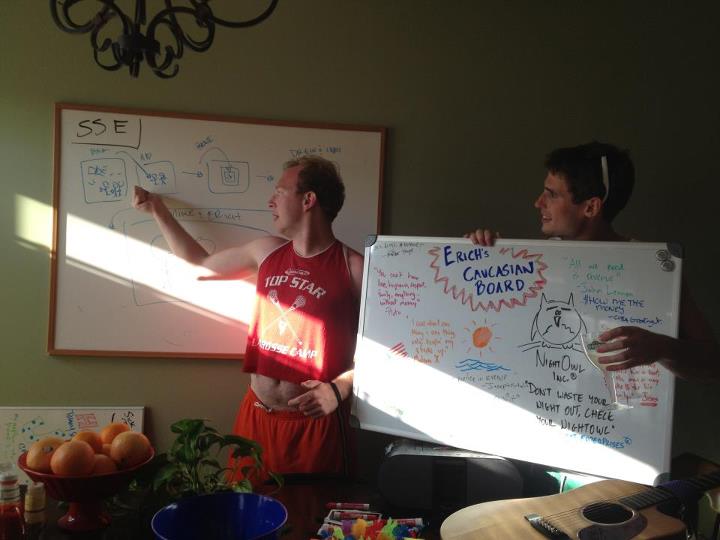
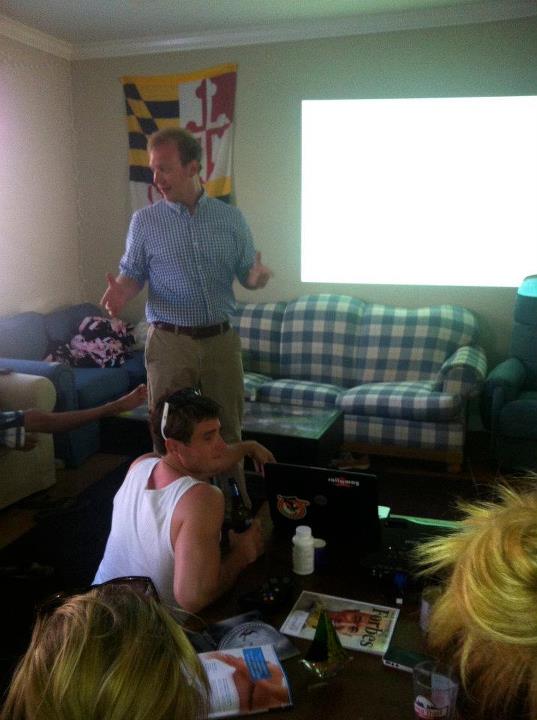
The idea of the club was inspired by the Shark Tank, Mark Cuban, and our fake business conglomerate Stack Street Enterprises.  Here are some pictures from the early days of the Baltimore Business Club, before we got real.